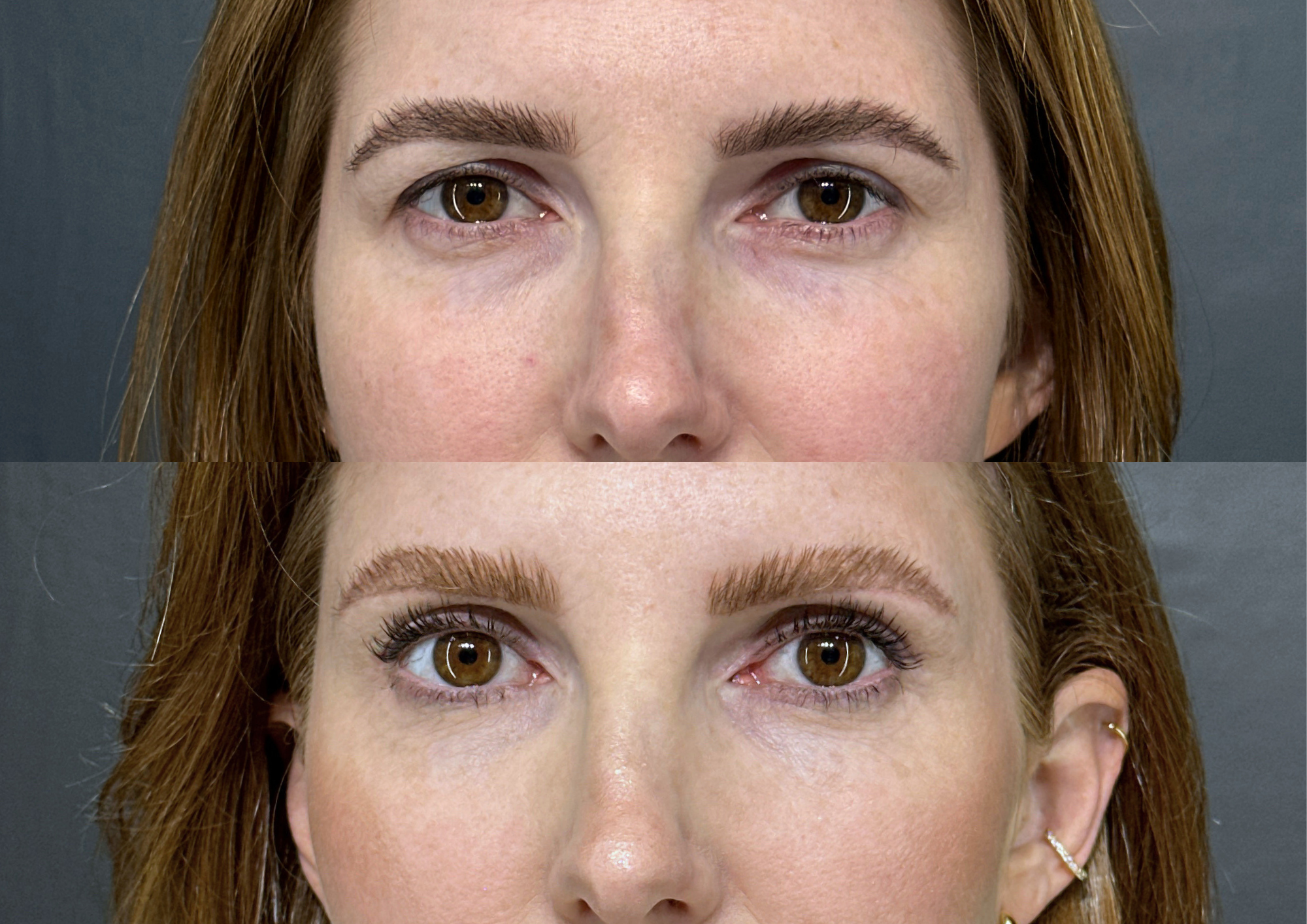
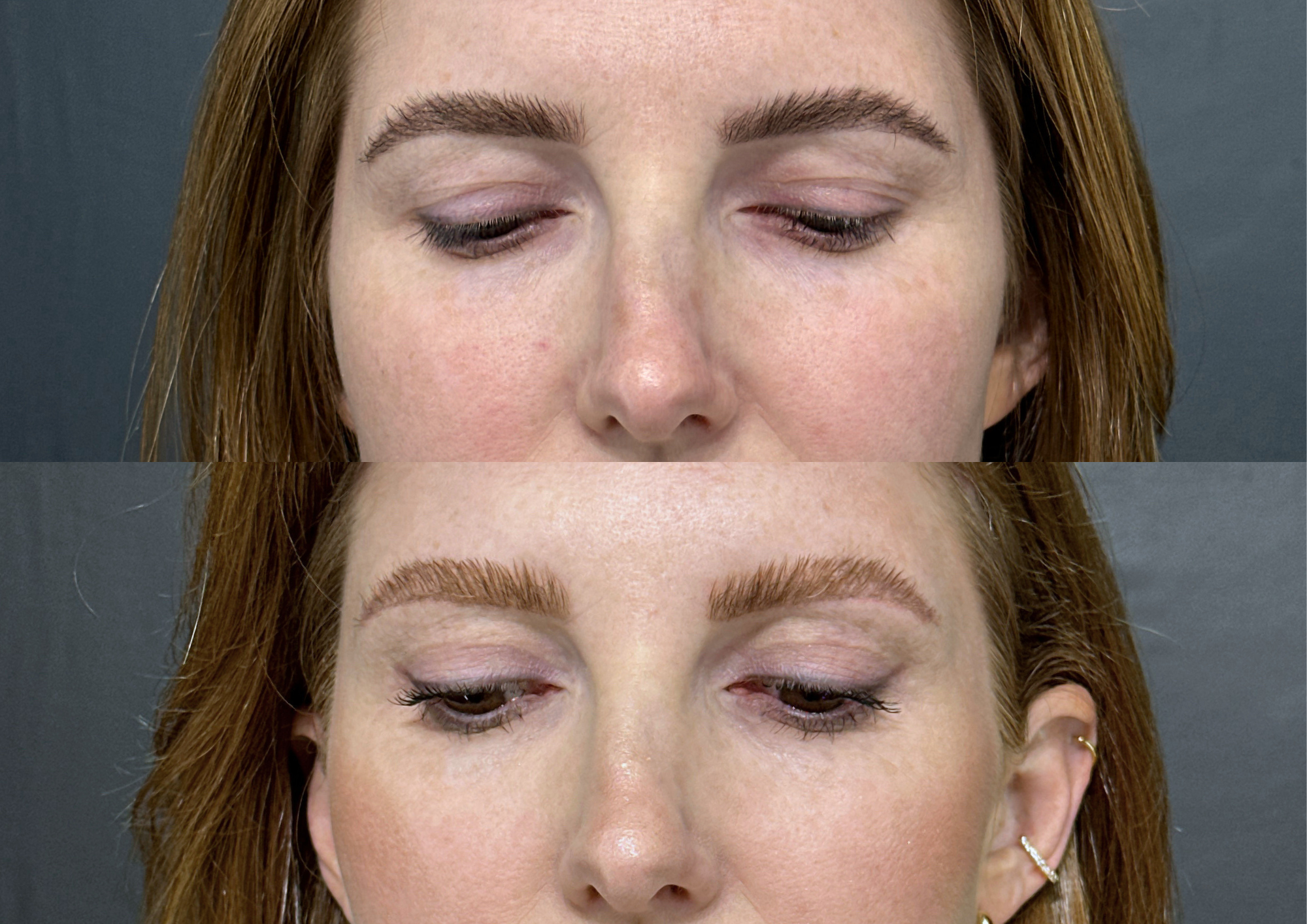
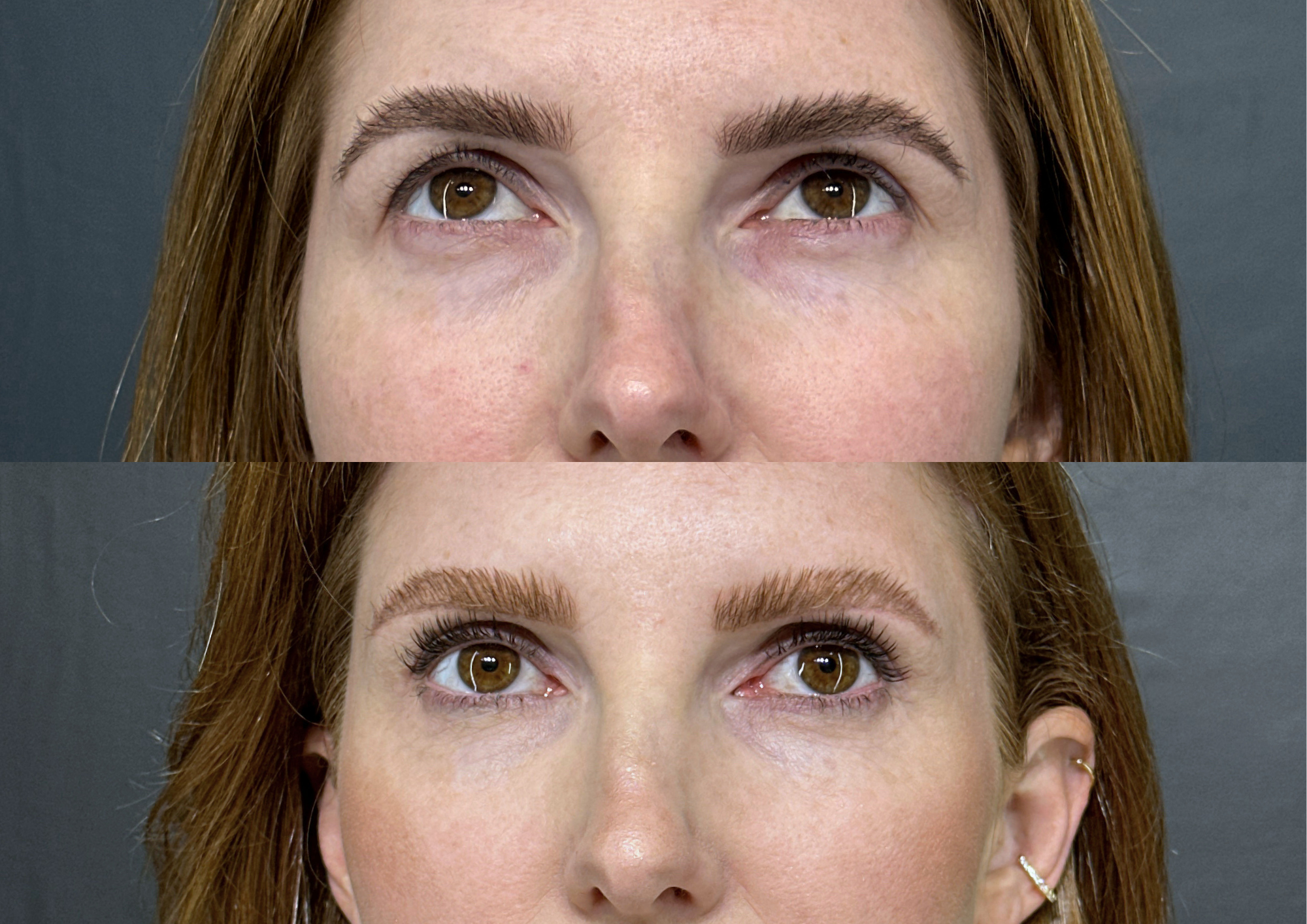
The patient was bothered by excess skin on her upper eyelids, small fat pockets, and a slight drop in the tail of her brow — which gave her eyes a tired appearance, even when she felt well. Her goal was a natural result: to open up her gaze and restore lightness, without altering her natural expression.
Since the concern involved both excess eyelid skin and a localized drop in the brow tail, the indication combined upper blepharoplasty with discreet suspension of that area — addressing both causes of the tired appearance without expanding the surgery's scope beyond what was necessary.
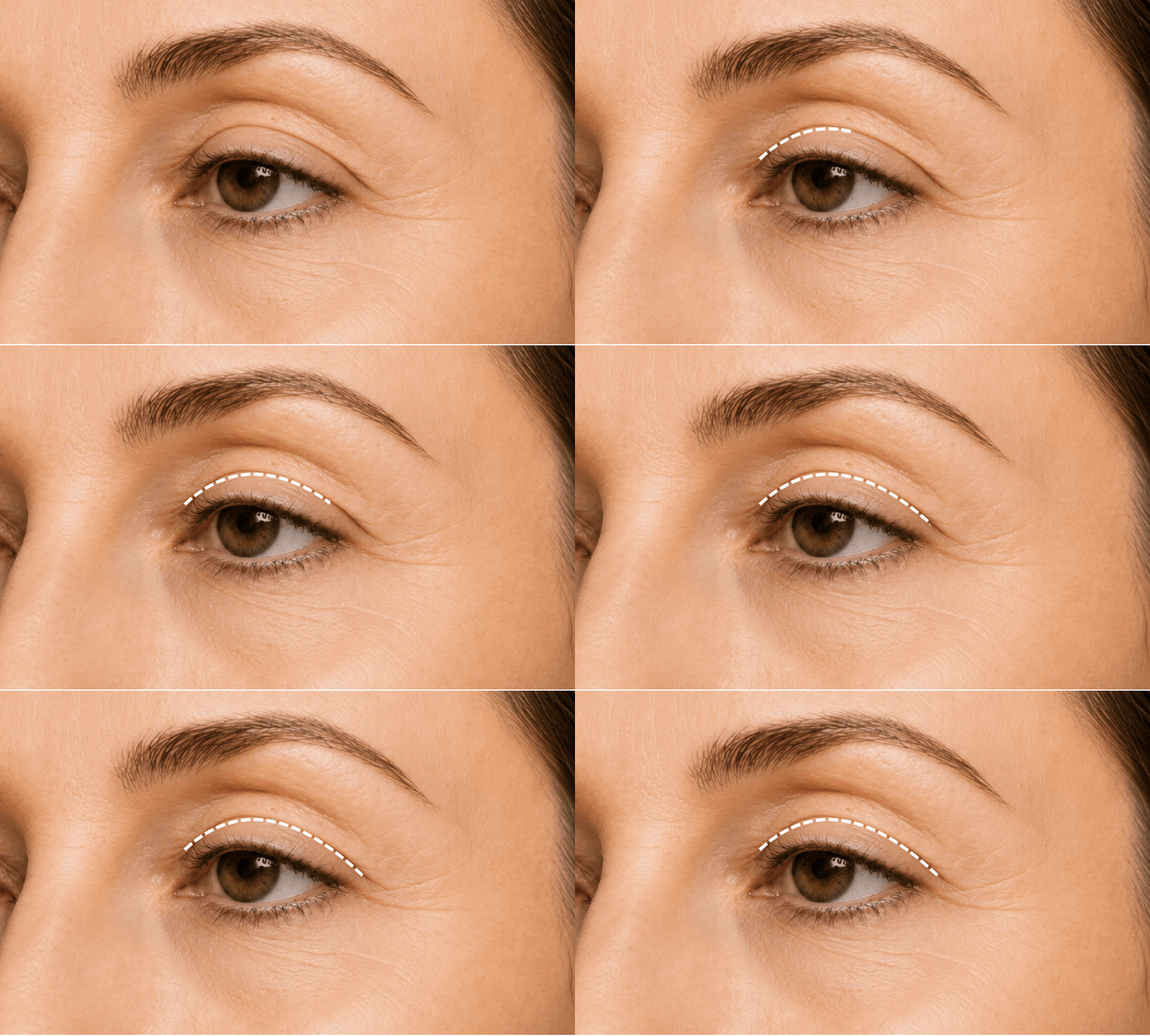
Upper blepharoplasty was performed through the natural crease of the eyelid, aiming for the greatest possible scar discretion.
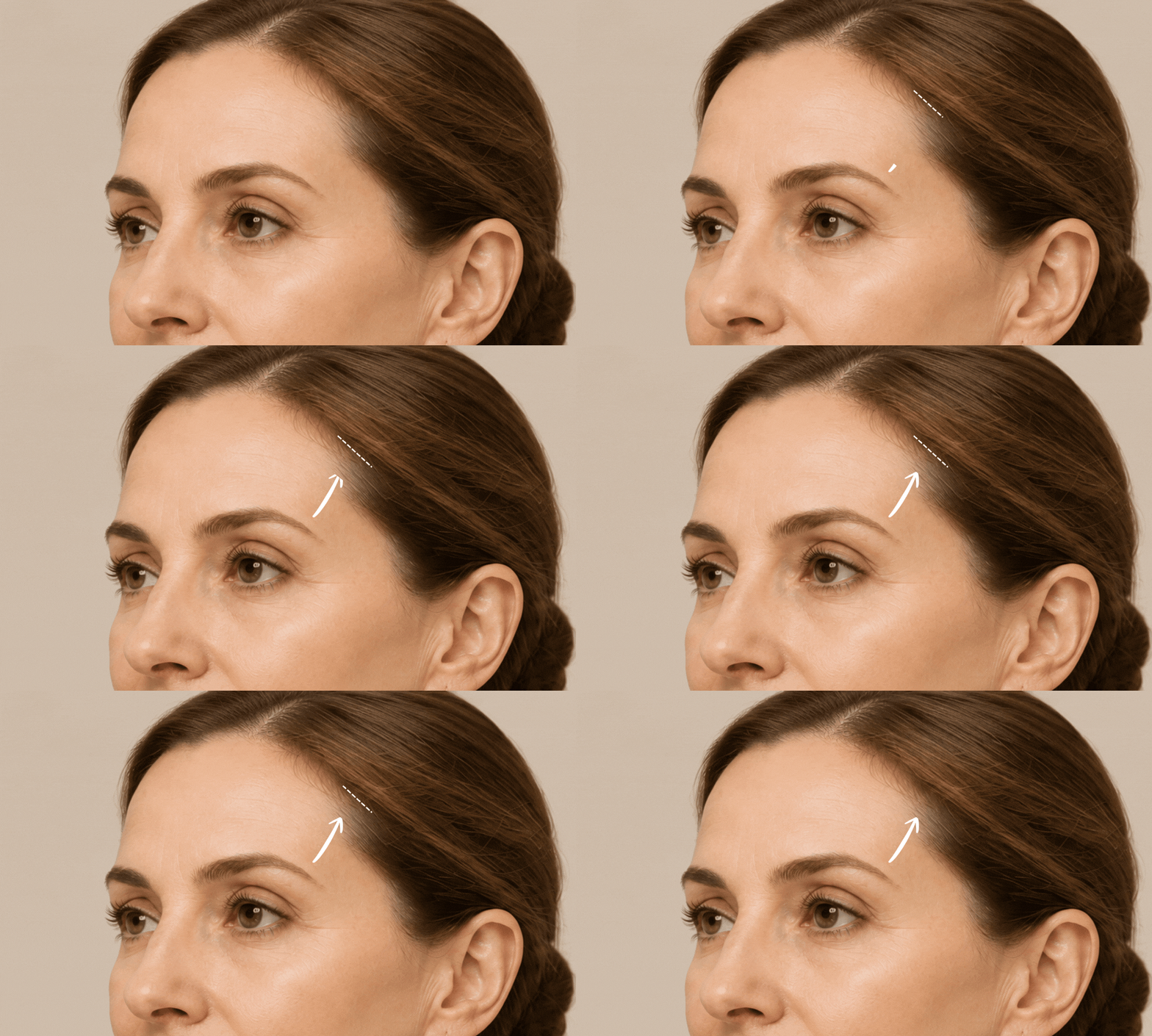
Brow tail suspension was performed through a small incision hidden within the hairline, leaving no visible scars.
Not every concern related to the eyes requires a broad facial rejuvenation plan. When the concern is concentrated in the eye area, treating just that region can restore balance to the gaze without altering the rest of the expression.
In this case, the plan prioritized reducing excess eyelid skin and providing a subtle lift to the tail of the eyebrow, softening the signs of tiredness. The technical goal sought meaningful improvement and lightness in the eye area, defining the scope of medical action to the areas of concern.
The plan was based on realistic tissue optimization goals, emphasizing that the procedure works through anatomical repositioning and that the final appearance and settling depend strictly on each patient's healing characteristics and unique bone and muscle structure.
The photographs shown on this page were taken approximately one year and four months after surgery — a stage at which the tissue has already completed its healing and settling process. At this point, the lightness sought in the surgical plan is already stable, reflecting the patient's individual biological response over this period.
 PT
PT EN
EN