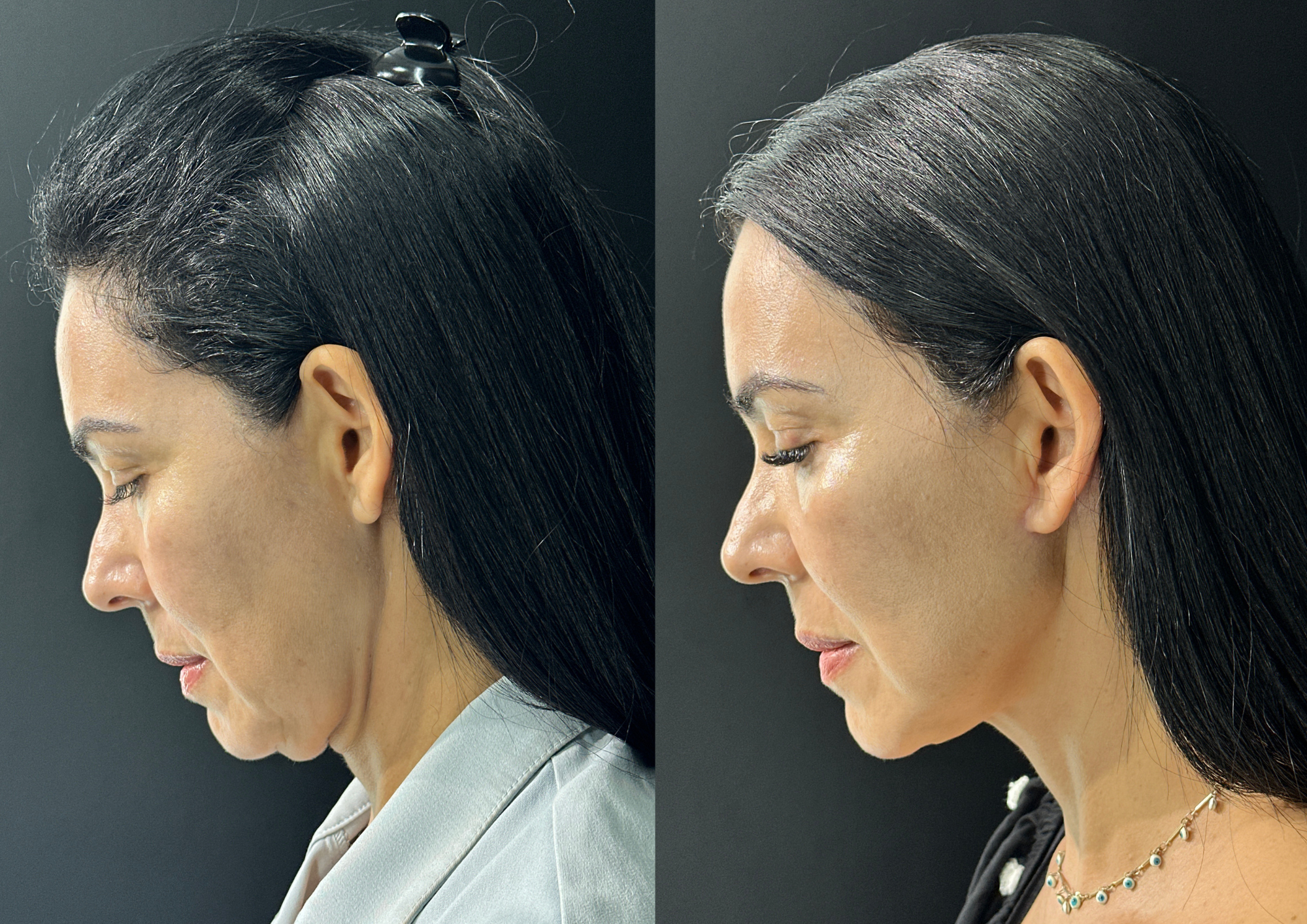
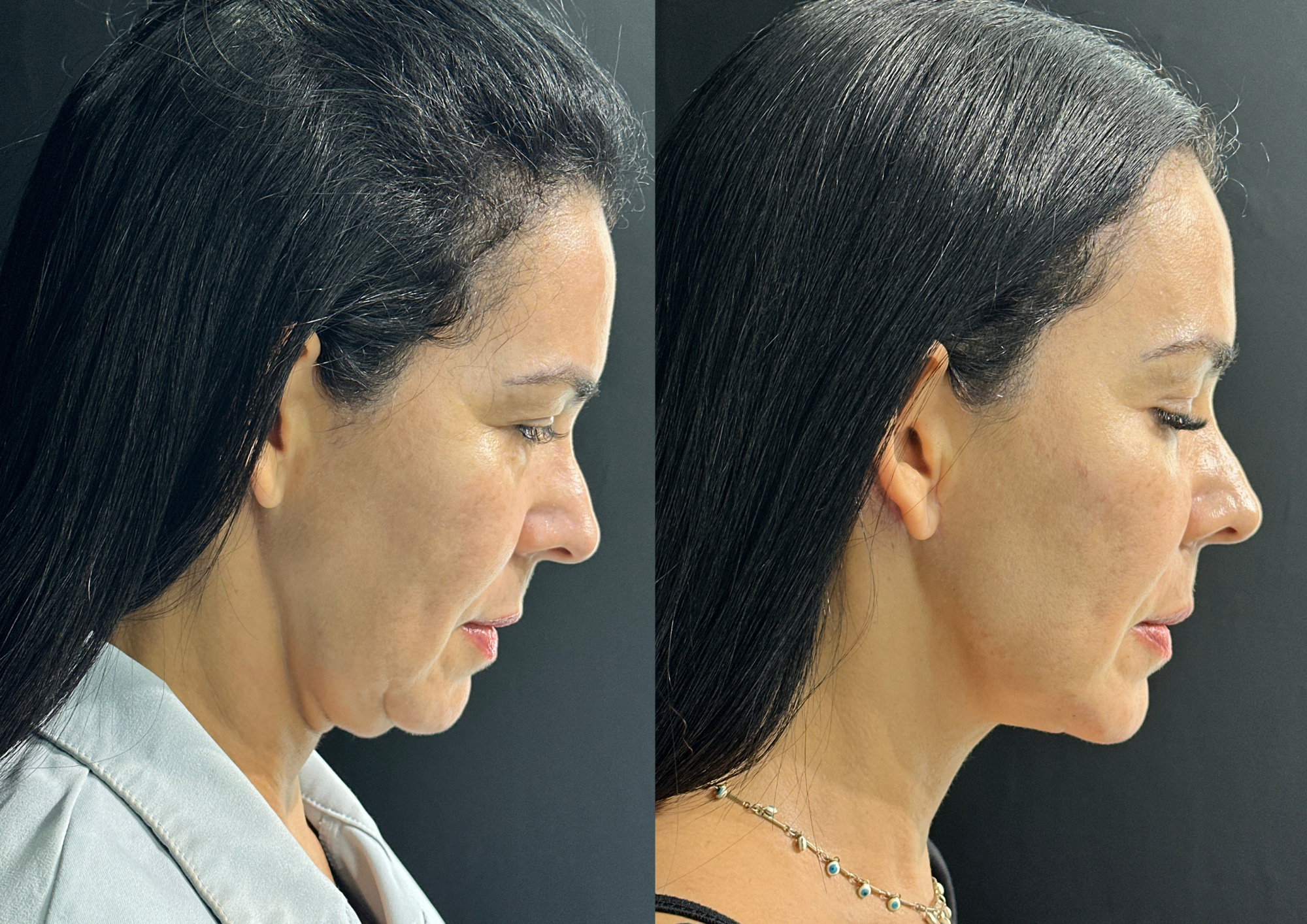
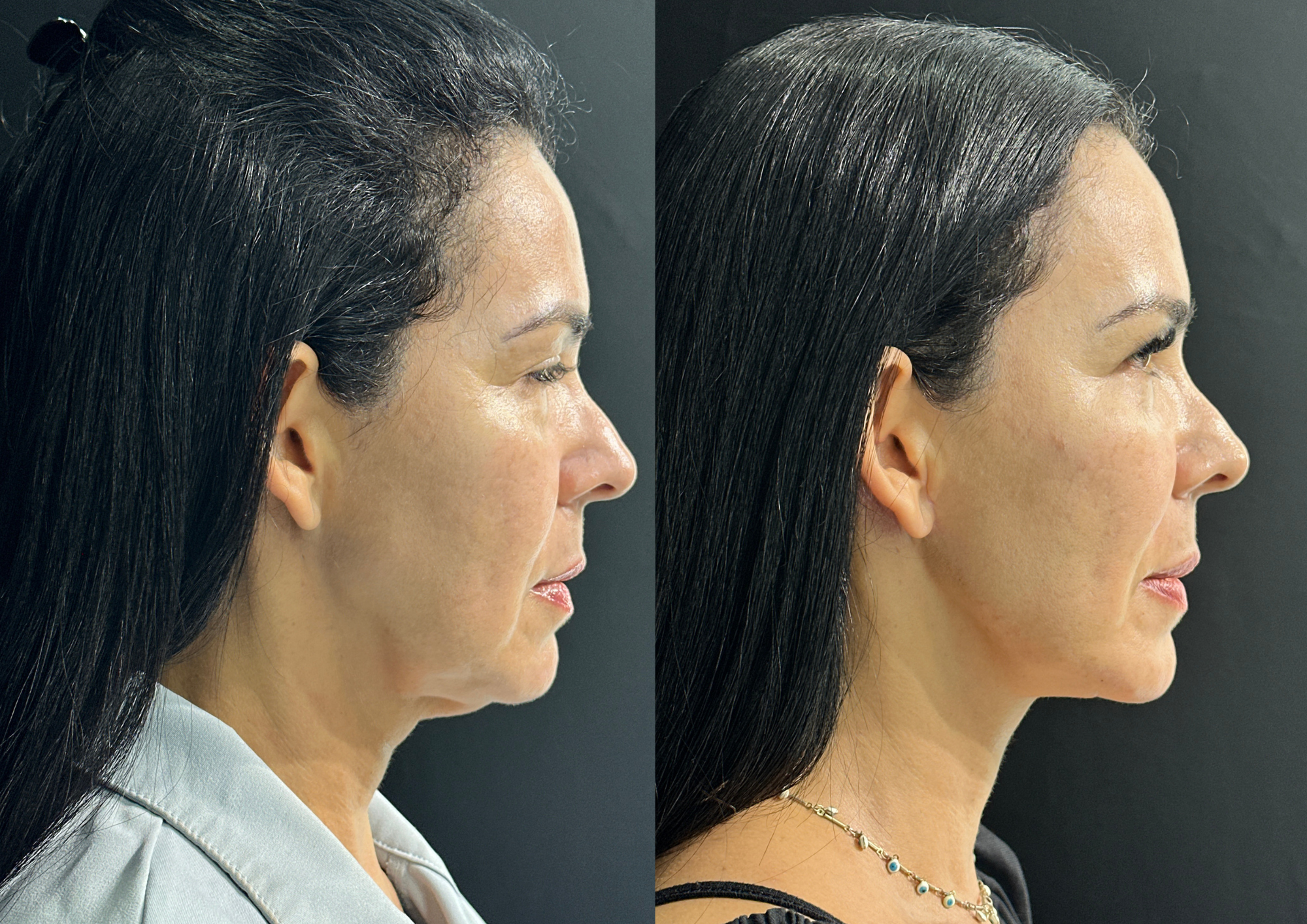
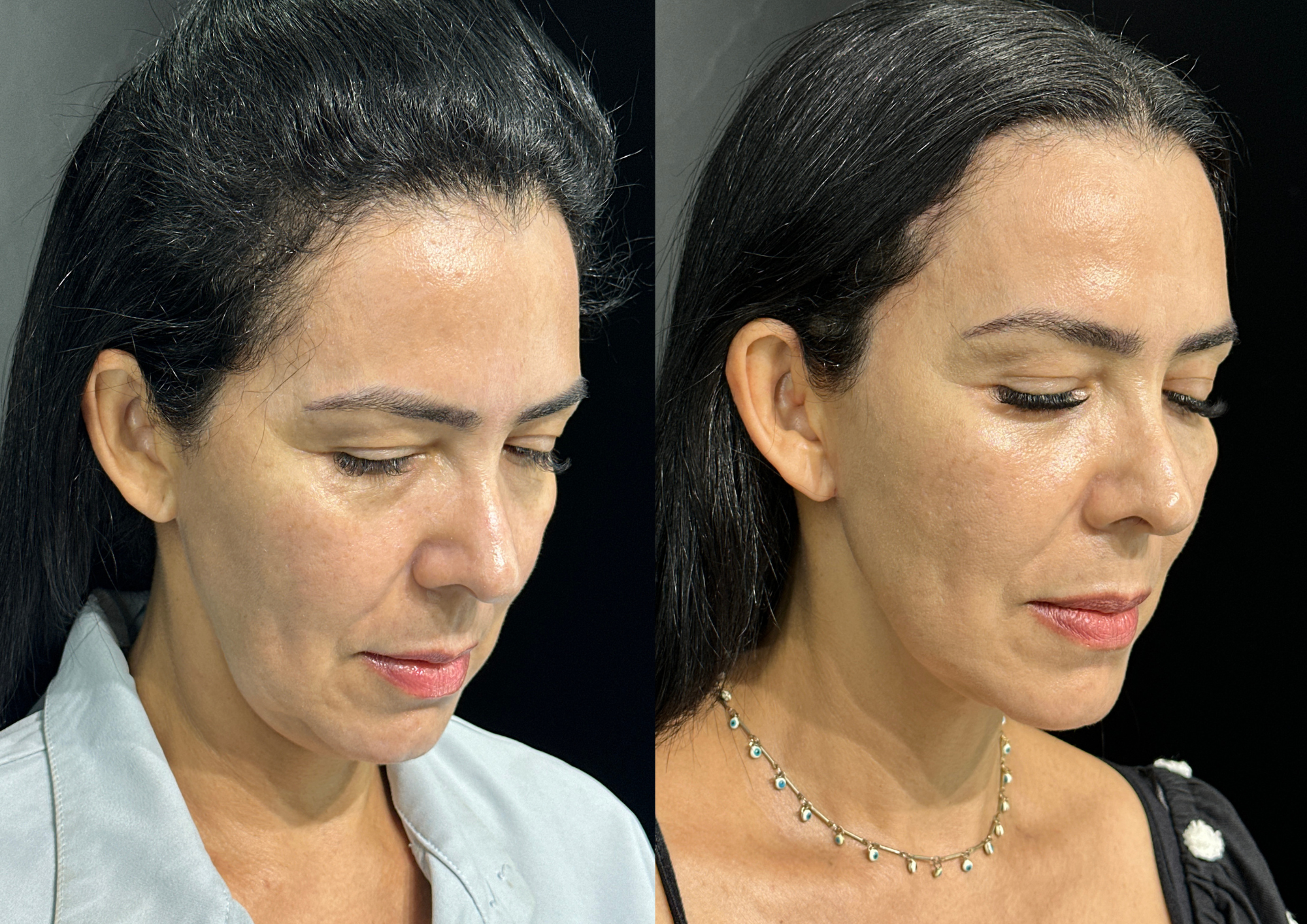
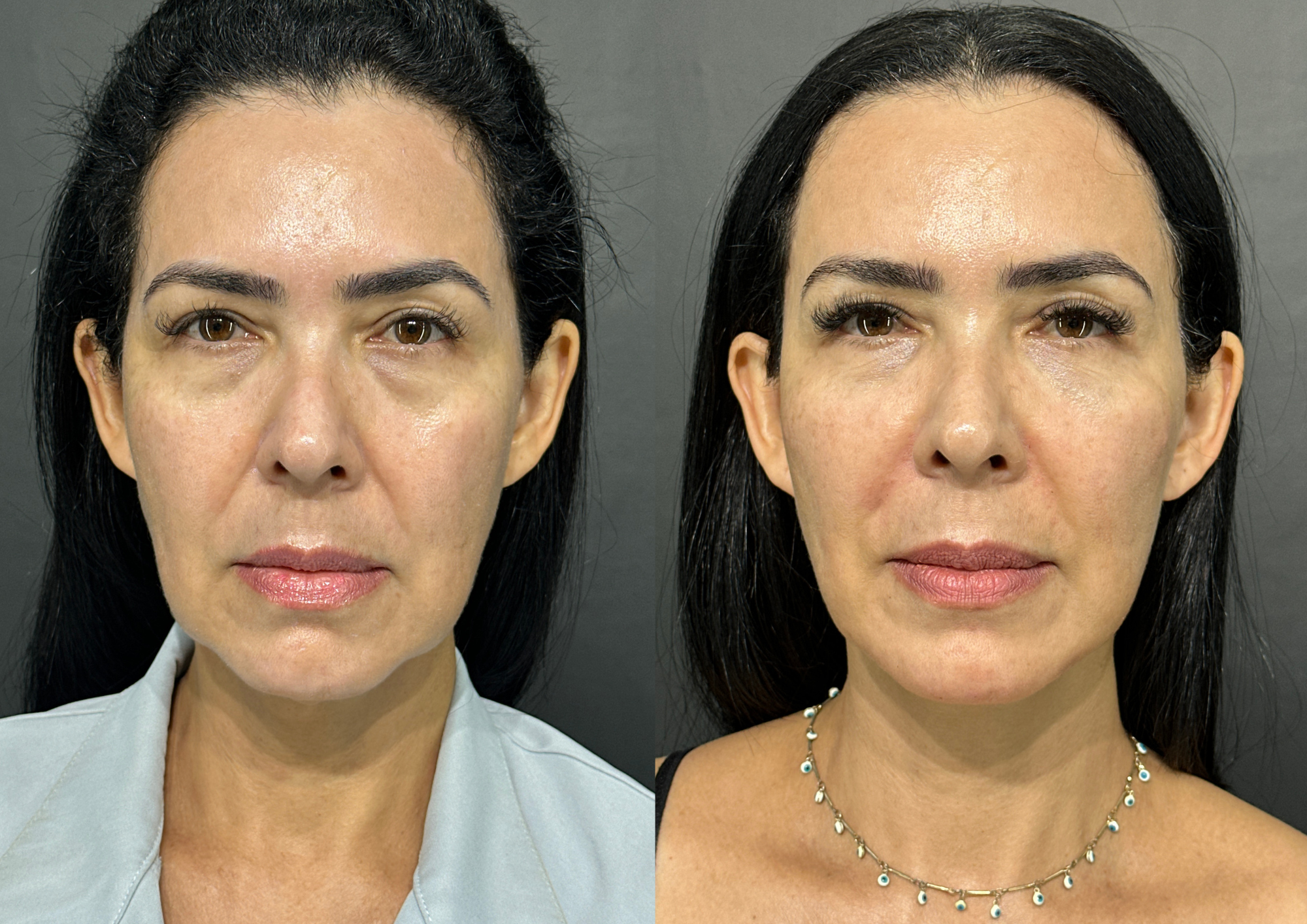
Splitting her routine between the United States and Brazil, the patient came to Dr. Marcelo primarily concerned about the loss of jawline contour, a "bulldog" and "marionette" appearance, and visible muscle laxity in the neck (platysma bands). She also described frustration with previous non-surgical procedures — in particular, thread suspension treatments, which had caused significant pain and discomfort without providing effective or lasting traction for her structural skin laxity.
As the signs of aging were clearly distributed across the midface and the neck, the indication was a Complete Deep Plane Microlift, combining deep facial repositioning with surgical treatment of the neck (Deep Neck).
During pre-operative consultations, the possibility of treating only the neck, or doing the procedure in stages, was considered. However, treating the neck in isolation would have left the midface and nasolabial fold without support, creating visual disharmony. The integrated approach allowed for restoring the natural continuity between the face and neck in a single procedure.
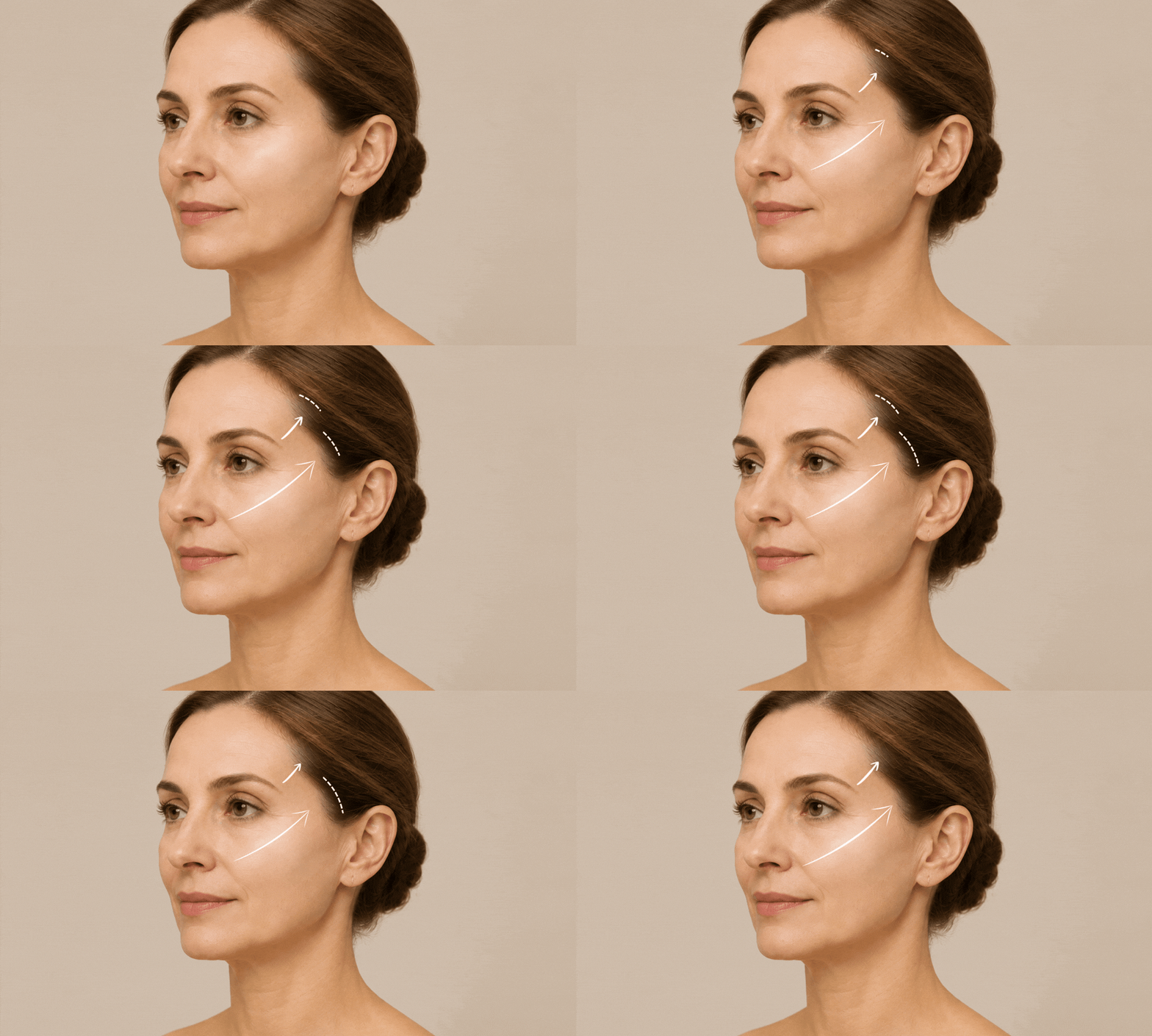
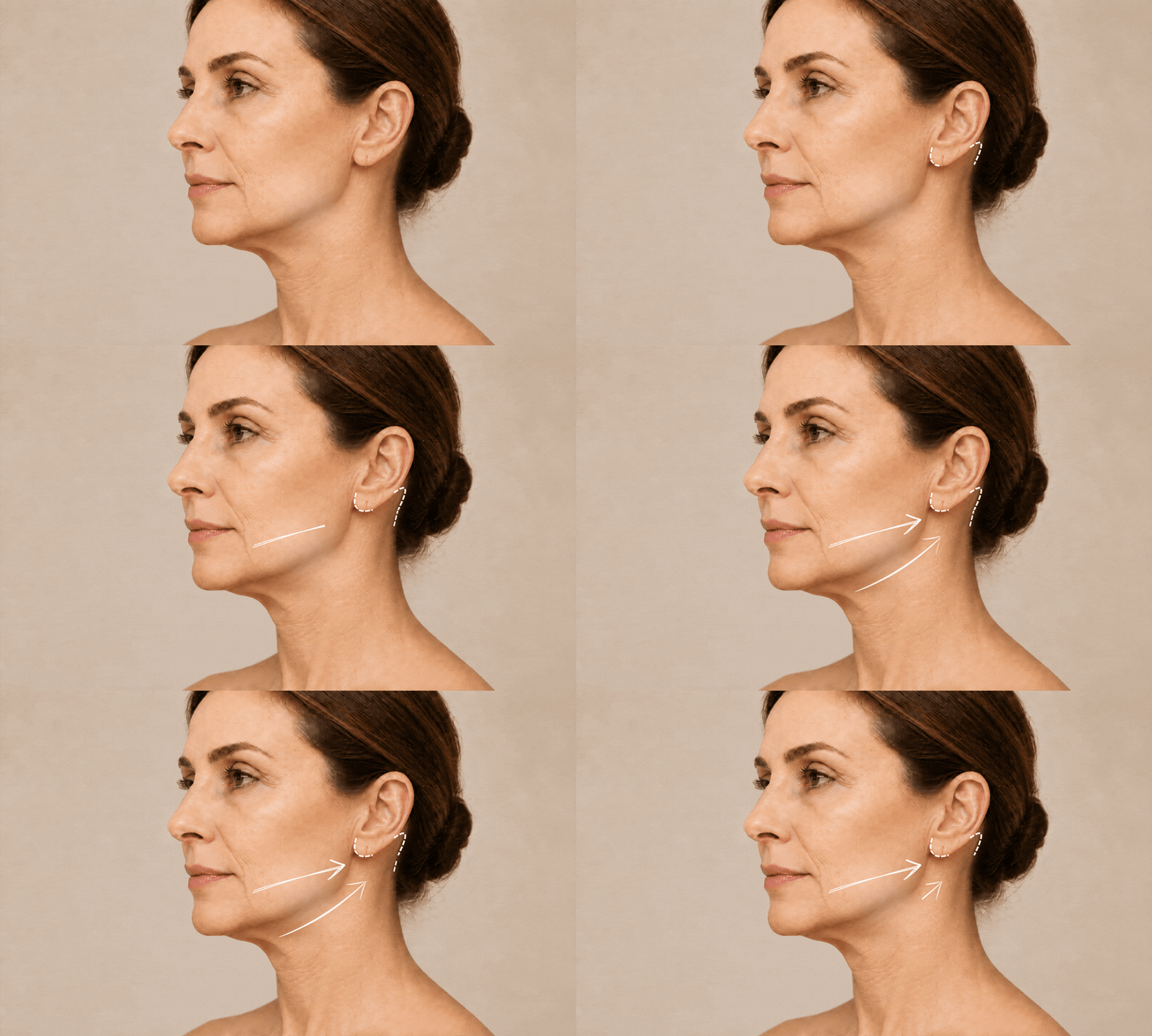
To treat the different regions, aiming for the greatest possible discretion in scarring:
For the upper face and temporal region suspension, incisions were placed within the scalp; for the midface, lower third, and jawline, access started at the earlobe, tracing around and staying hidden within the crease behind the ear; for the neck and surgical treatment of the platysma muscle (Deep Neck), a small, delicate incision was made beneath the chin (submental).
This anatomical approach allows direct work on the deeper planes (SMAS and platysma) without excessive tension on the superficial skin, aiming to preserve scar discretion.
The patient's previous experience with thread suspension helps explain why a more superficial procedure would not have been enough in this case: when laxity is already structural, it's necessary to work on the face's deeper layers, not just the skin.
This was the reasoning behind choosing the Deep Plane technique — working directly on these deeper layers, repositioning what had already lost support. Treating the face and neck in the same surgery also respected the patient's routine between the two countries, avoiding two separate recoveries — always with the understanding that release and return timelines depend on in-person clinical evaluation, not a fixed calendar.
The overall goal was an elegant, natural-looking result, free of a "stretched" appearance, respecting the patient's expression and identity — within what each individual organism's biological response allows.
The photos, taken approximately six months after surgery, illustrate how the tissue responded over that period.
A more defined jawline, softened lines around the mouth, and a firmer neck contour are already visible — a result consistent with the original plan and reflecting the patient's individual biological response.
 PT
PT EN
EN