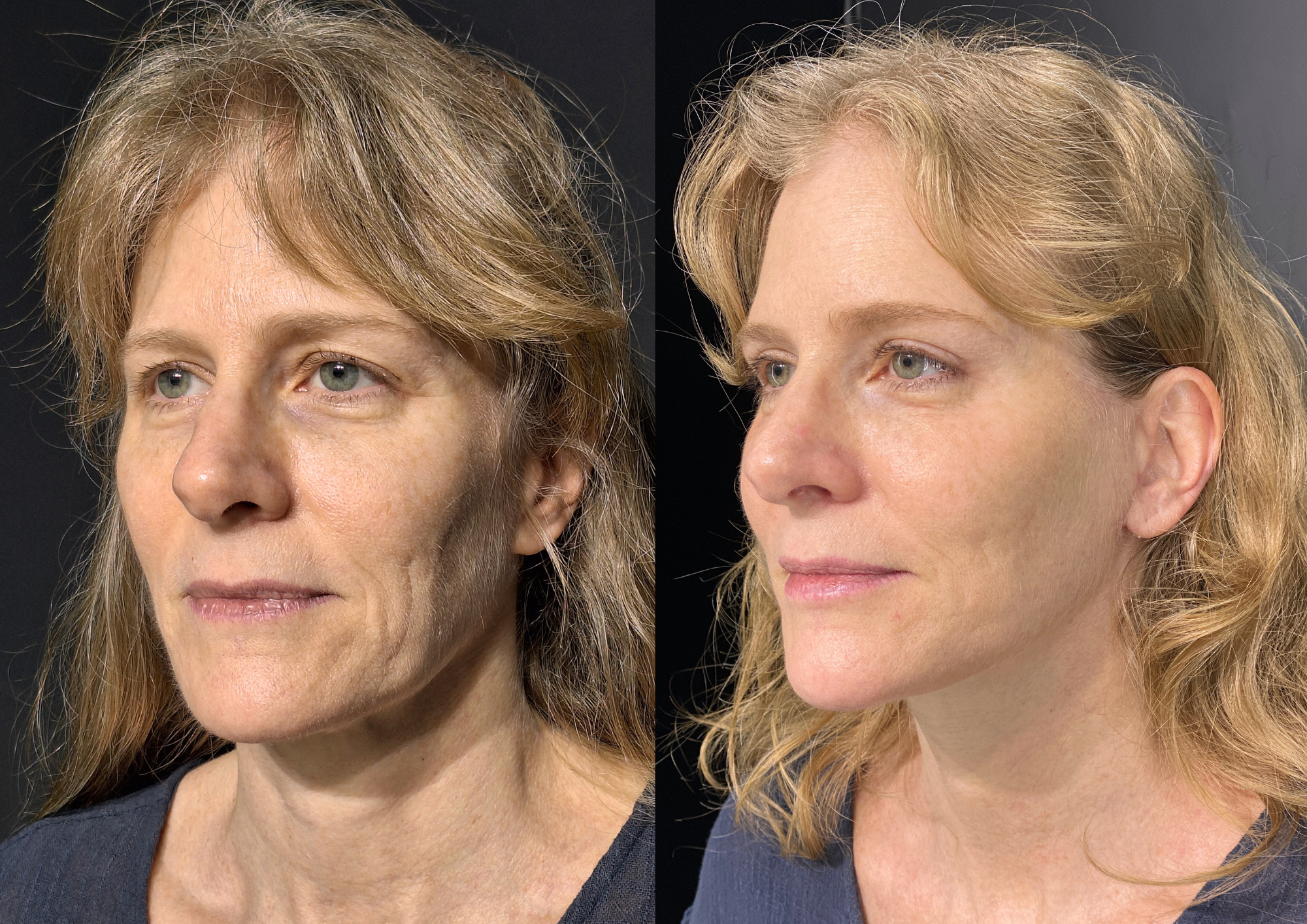
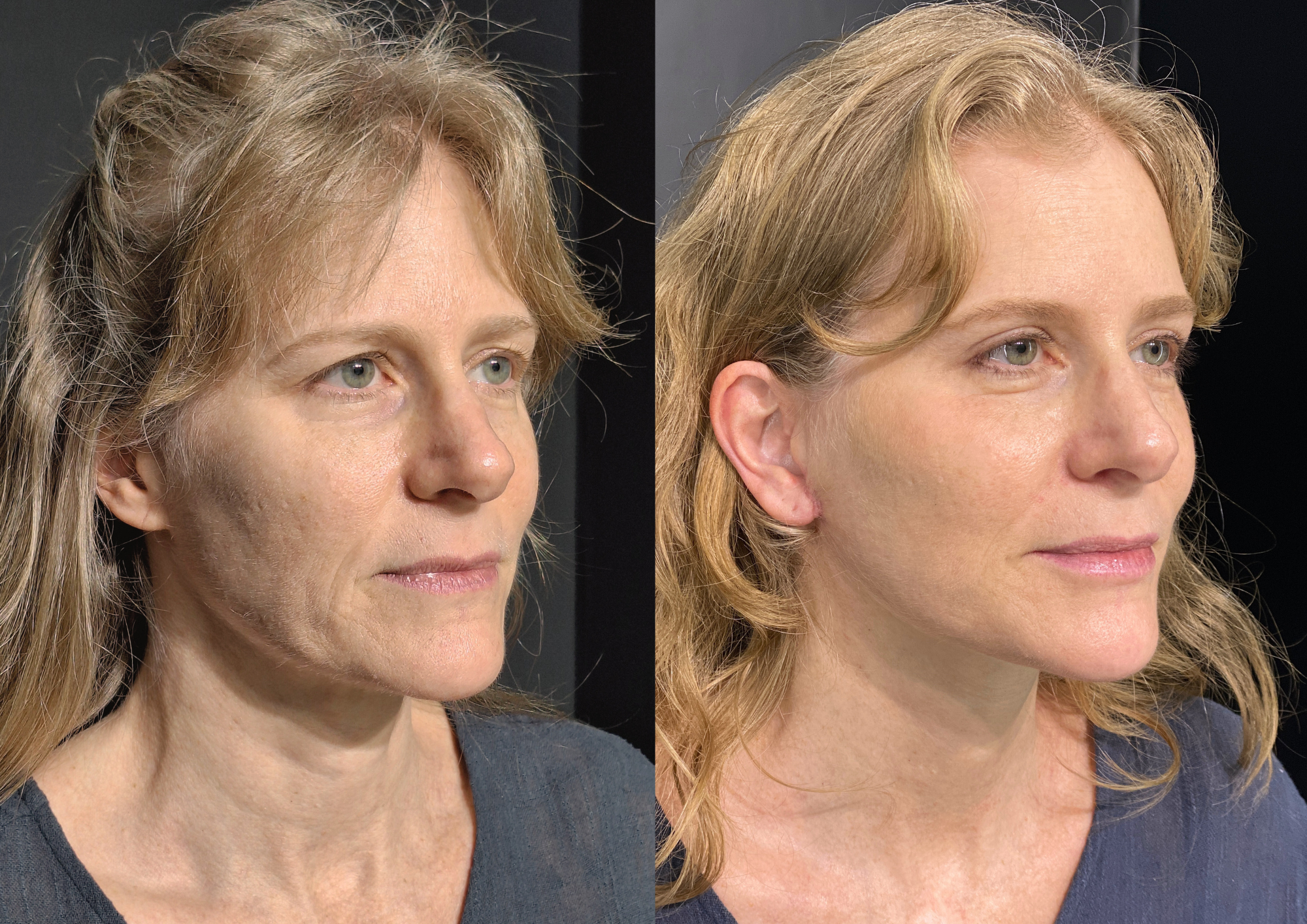
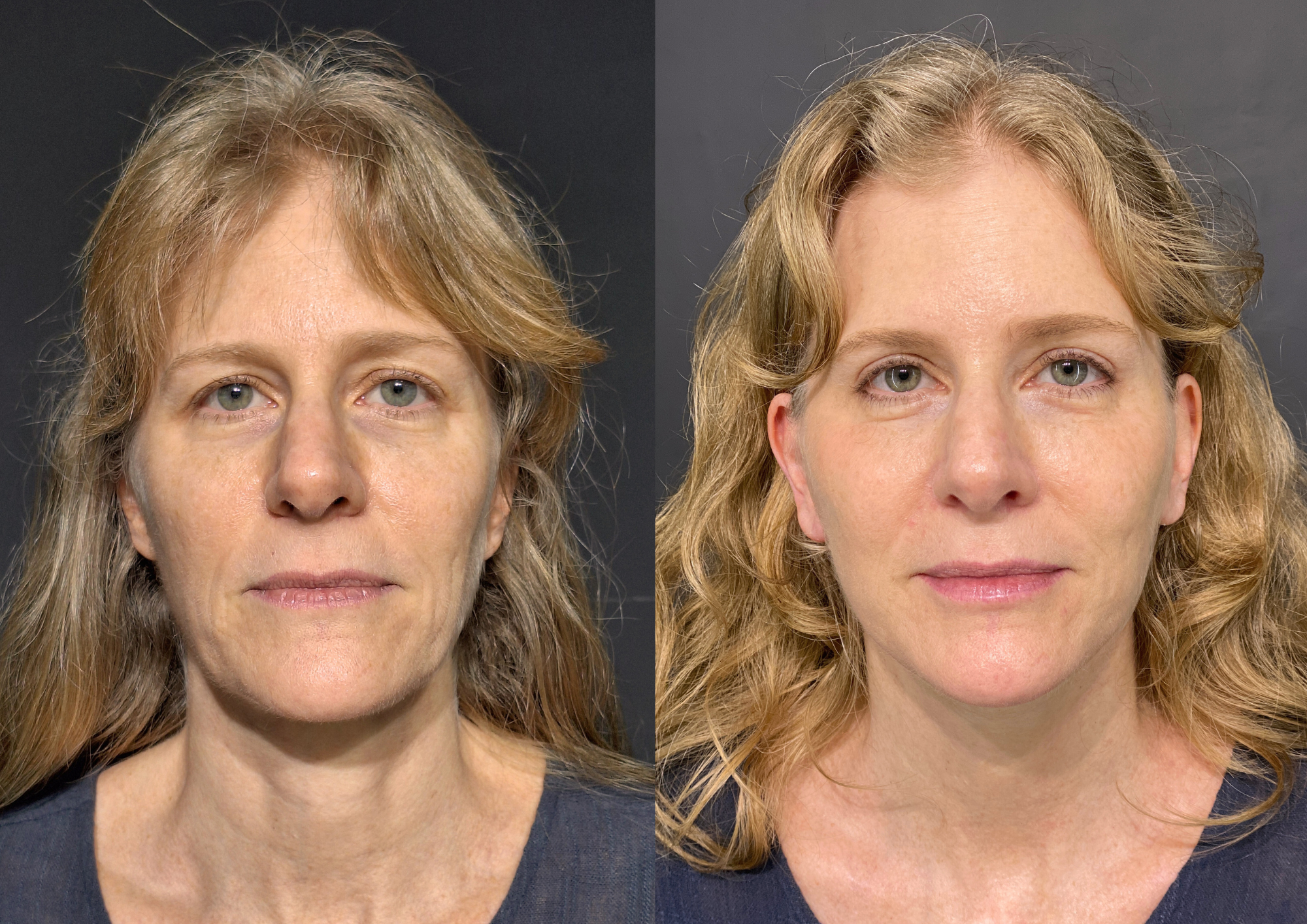
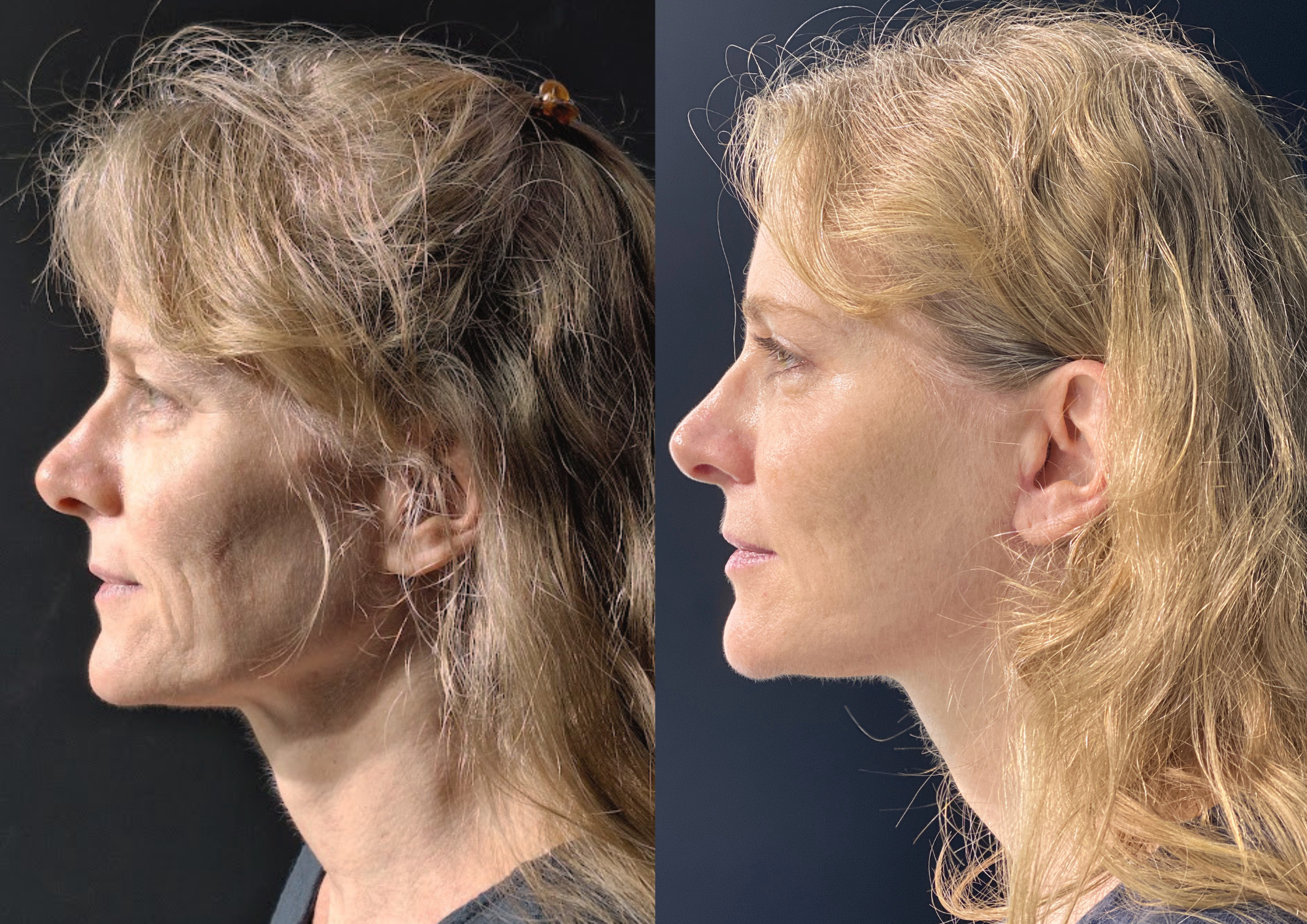
The patient was primarily concerned about the central region of her face, near the nose and cheekbone. Like many patients, she was also apprehensive about visible scarring — particularly scars in front of the ear or near the hairline. For this reason, she sought a plan that would address her concerns safely, without extensive or visible incisions.
Given her concerns about scarring and her preference for a more gradual approach, the indication was to divide the plan into two stages, respecting her pace and comfort level at each point.
The first stage focused on the upper and central regions of the face, along with the eye area. The second stage, performed later, addressed the neck and lower third of the face — areas that became more noticeable over time.
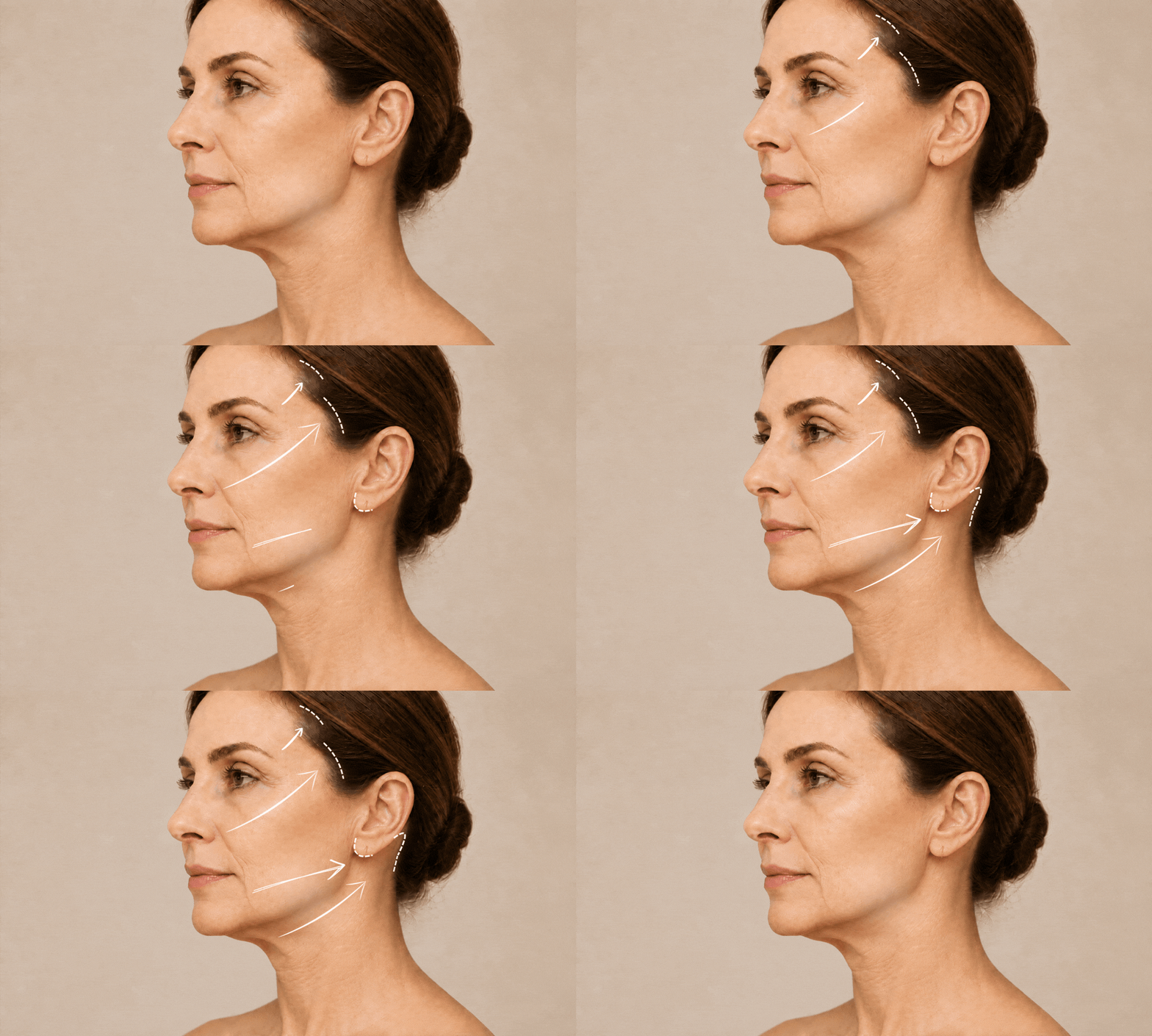
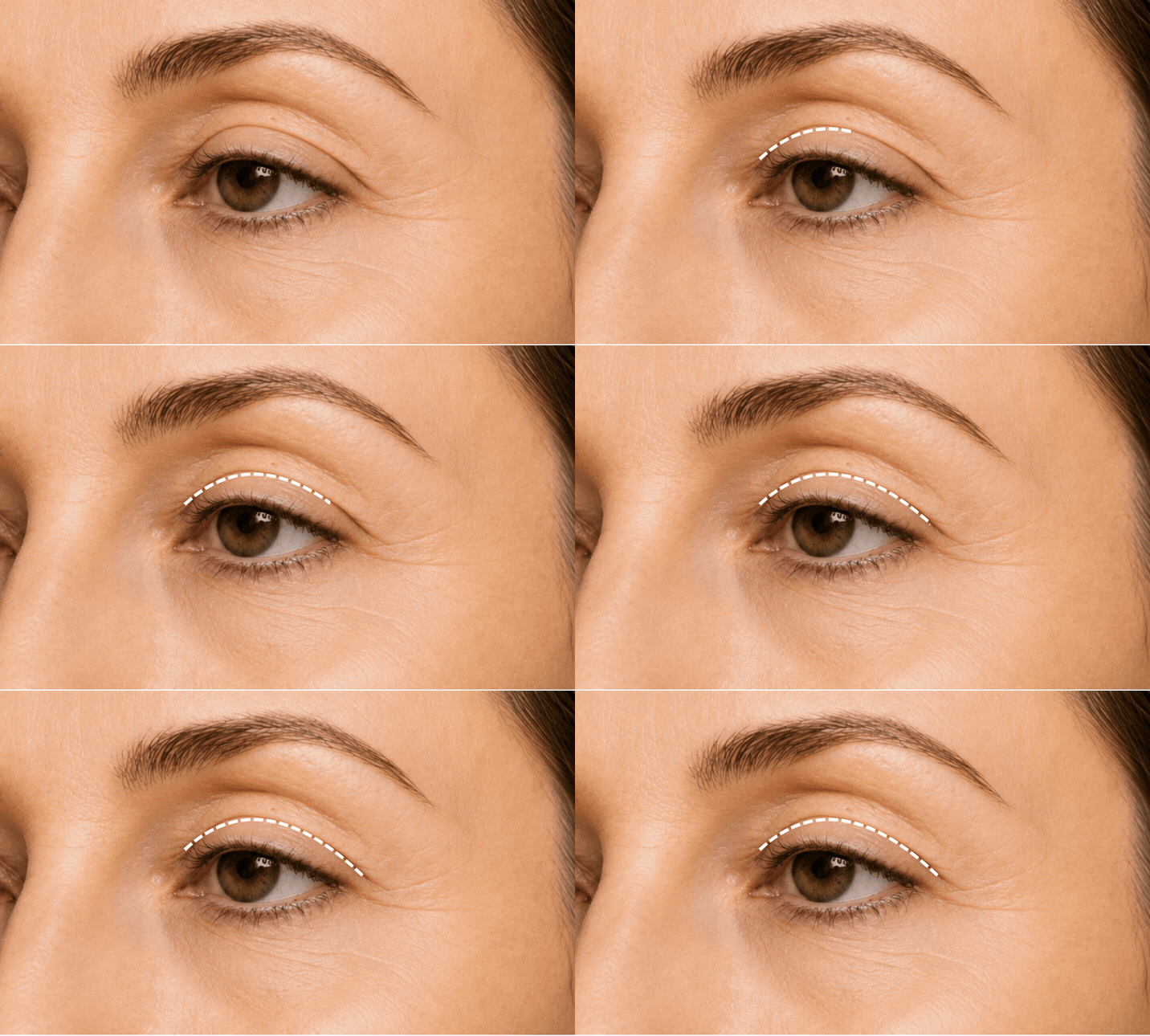
In the first stage, access for elevating the central face was made through small incisions hidden within the hairline, near the sideburn. A second access point at the top of the scalp allowed release of the temporal region and elevation of the brow tail. Blepharoplasty was performed through the natural eyelid crease.
In the second stage, access was made through an incision hidden behind the earlobe, allowing treatment of the deeper tissues of the neck, jawline, and marionette lines — without the need for incisions in front of the ear.
In both stages, the goal was to treat the deeper facial structures while keeping scars completely discreet.
Not every patient needs — or wants — to undergo extensive surgery all at once. When there is concern about scarring, or a preference for a more gradual process, dividing treatment into stages can be just as effective an approach, and just as safe.
In this case, the patient divided treatment into two stages, initially prioritizing the central third and the eye area, and later addressing sagging in the neck and lower contour. This strategy allowed for a gradual, planned management of the effects of time.
The surgical goal focused on meaningful improvement of the anatomical structures at each stage, establishing realistic technical goals while recognizing that medicine is not an exact science: each stage involved independent tissue healing and settling, respecting the pace and biological limits of each patient's own body.
The photographs shown on this page were taken approximately 20 days after the second stage of treatment — still an early stage of healing and tissue settling. At this stage, some residual swelling is expected, with the result becoming more fully visible in the following weeks. Even so, the more defined contour the patient was looking for is already noticeable, reflecting the goals of the two-stage surgical plan.
 PT
PT EN
EN