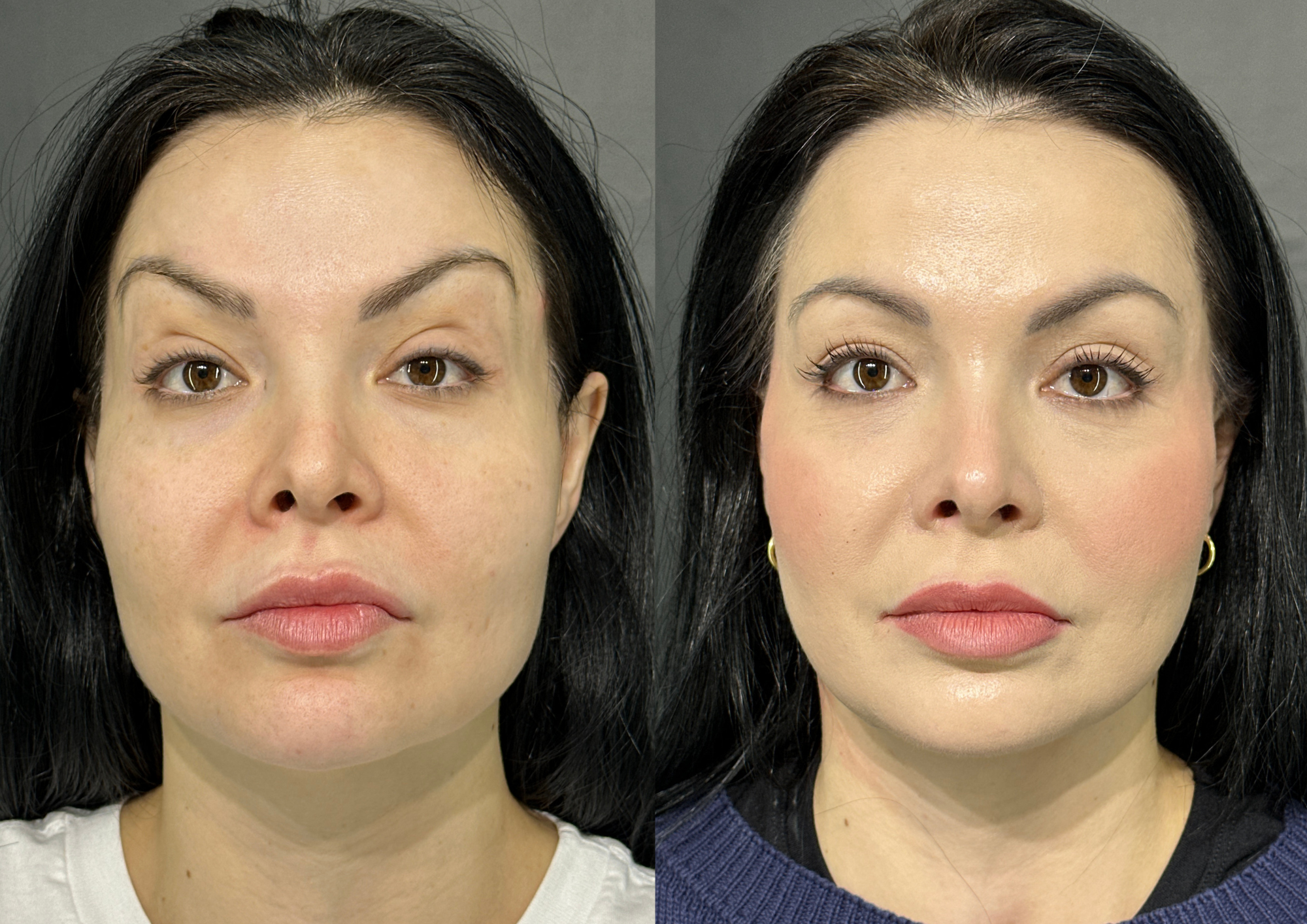
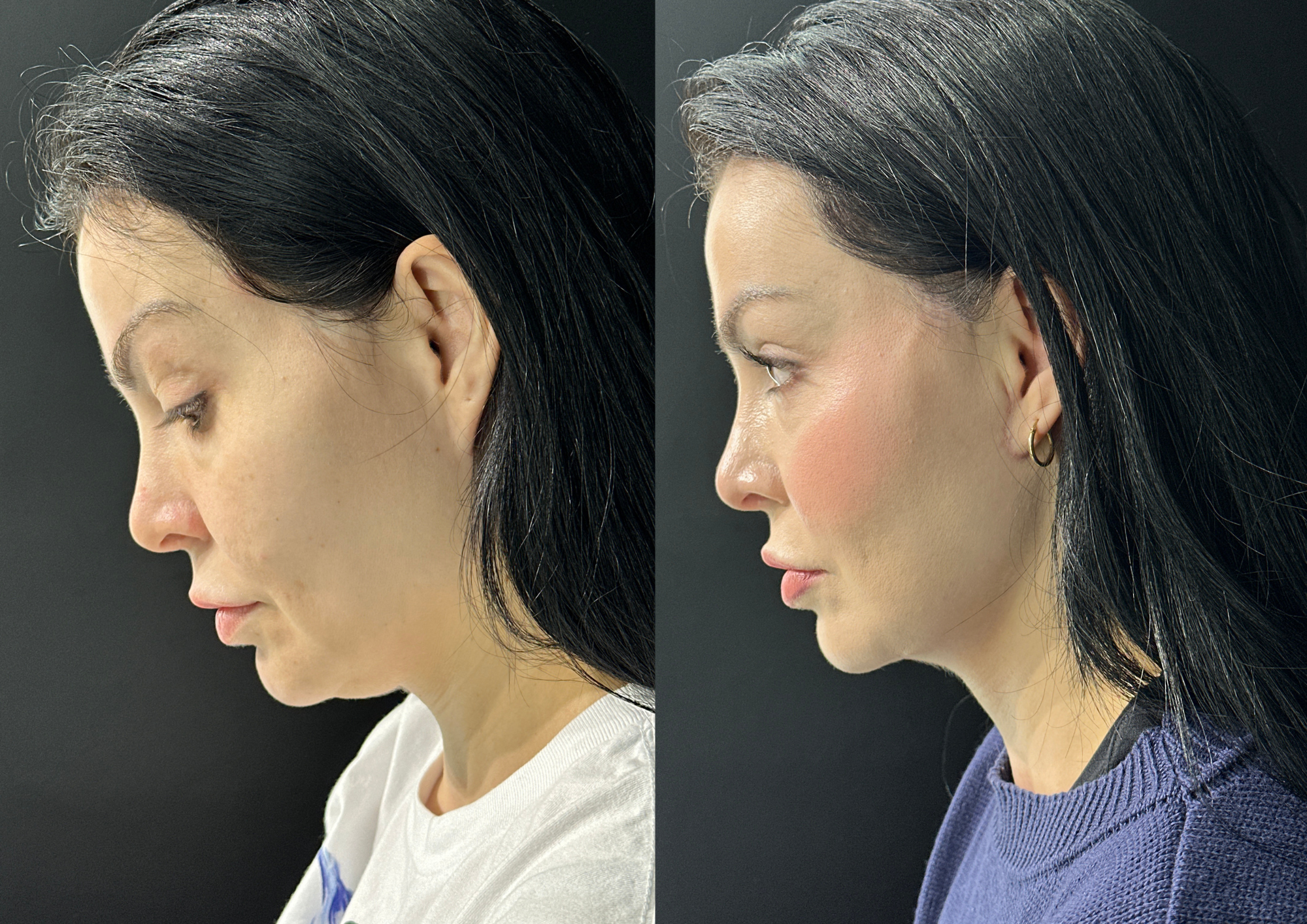
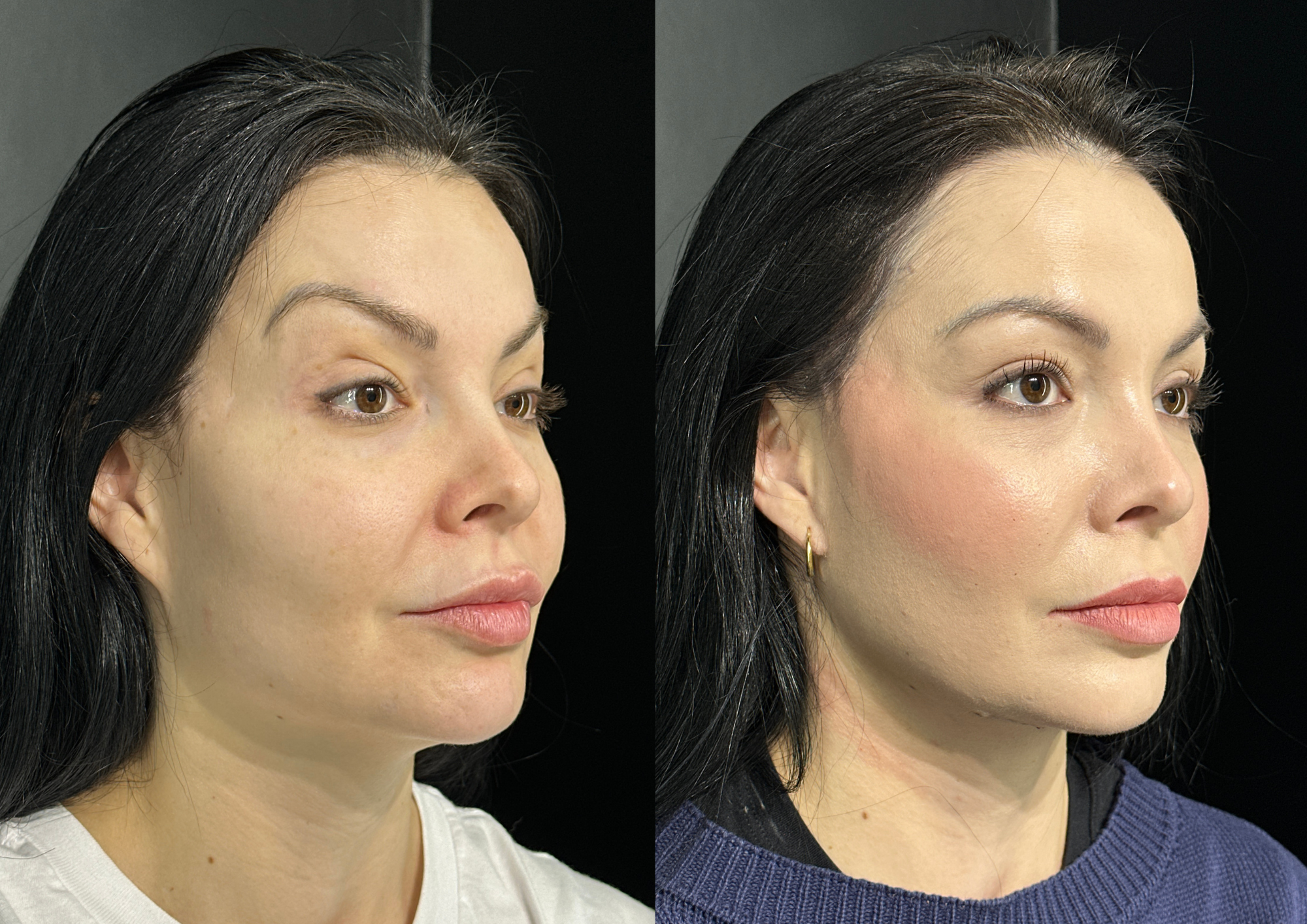
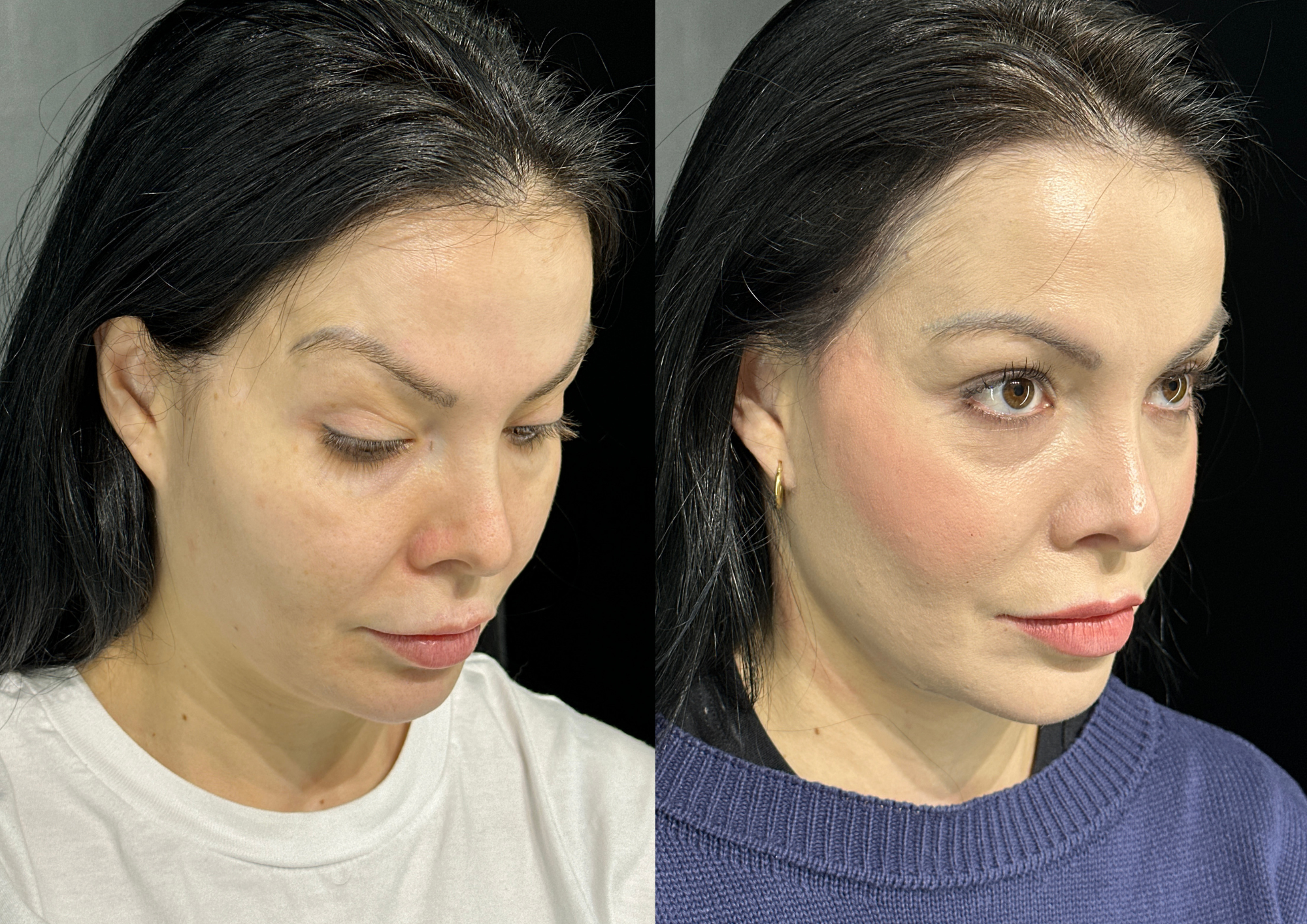
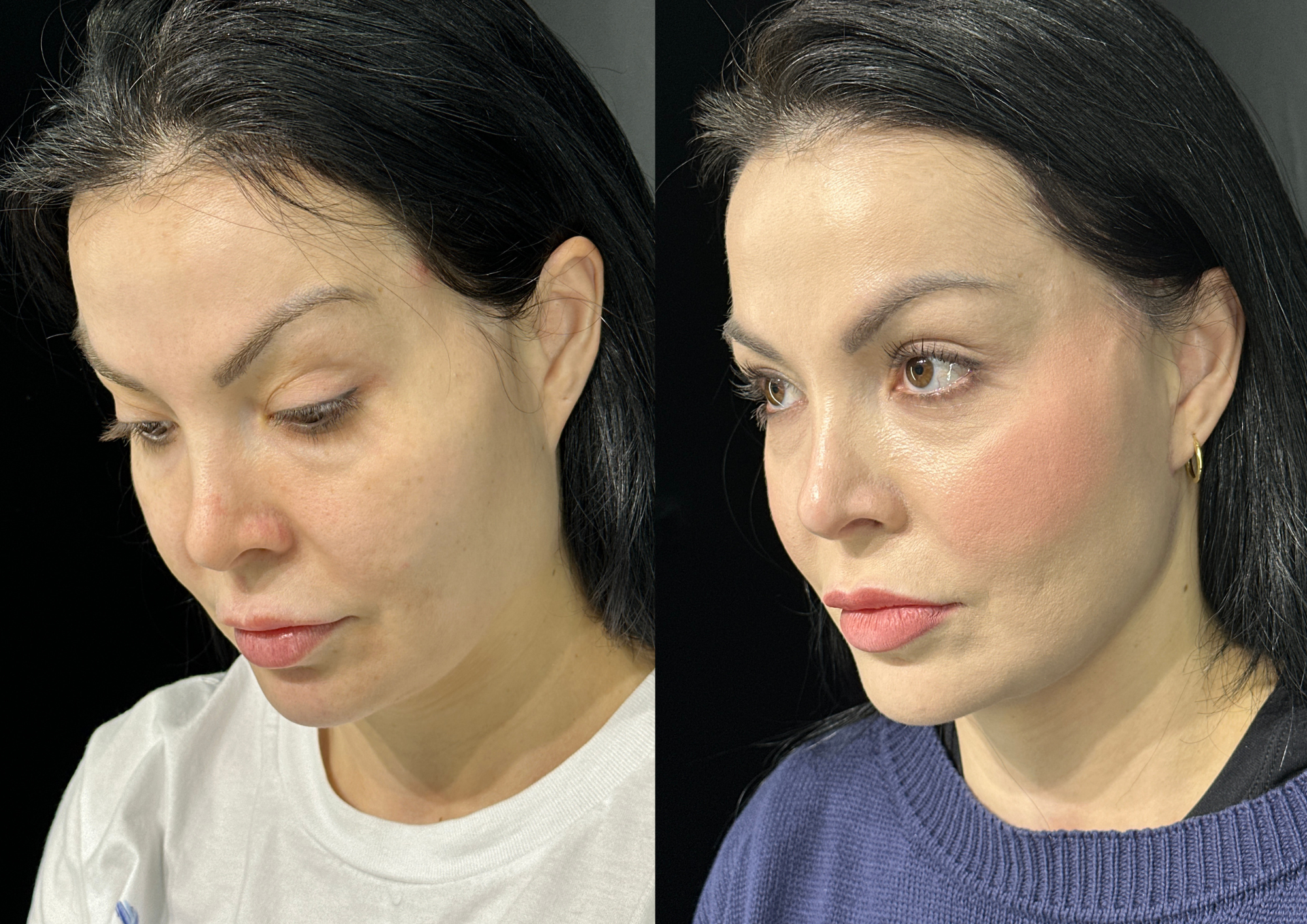
At 42, the patient came in with an increasingly common concern: the feeling that her own face was becoming heavy and "overfilled" after years of relying on dermal fillers and other injectable treatments.
What started as a way to disguise early signs of laxity gradually changed her features without actually solving the underlying issue — the result no longer looked like her. She reached a point where filling no longer made sense: what she wanted was to recover the natural delicacy of her own face, with real support, not more volume.
The clinical evaluation showed that the loss of definition in the midface and jawline was not a matter of insufficient volume — it was the descent of deeper facial tissues, including the neck muscle (platysma).
For this reason, the indication was a Complete Deep Plane Microlift (Face and Neck): instead of continuing to add volume from the outside, the approach was to reposition the structures that had lost support, treating the cheek area, jawline, and neck transition together.
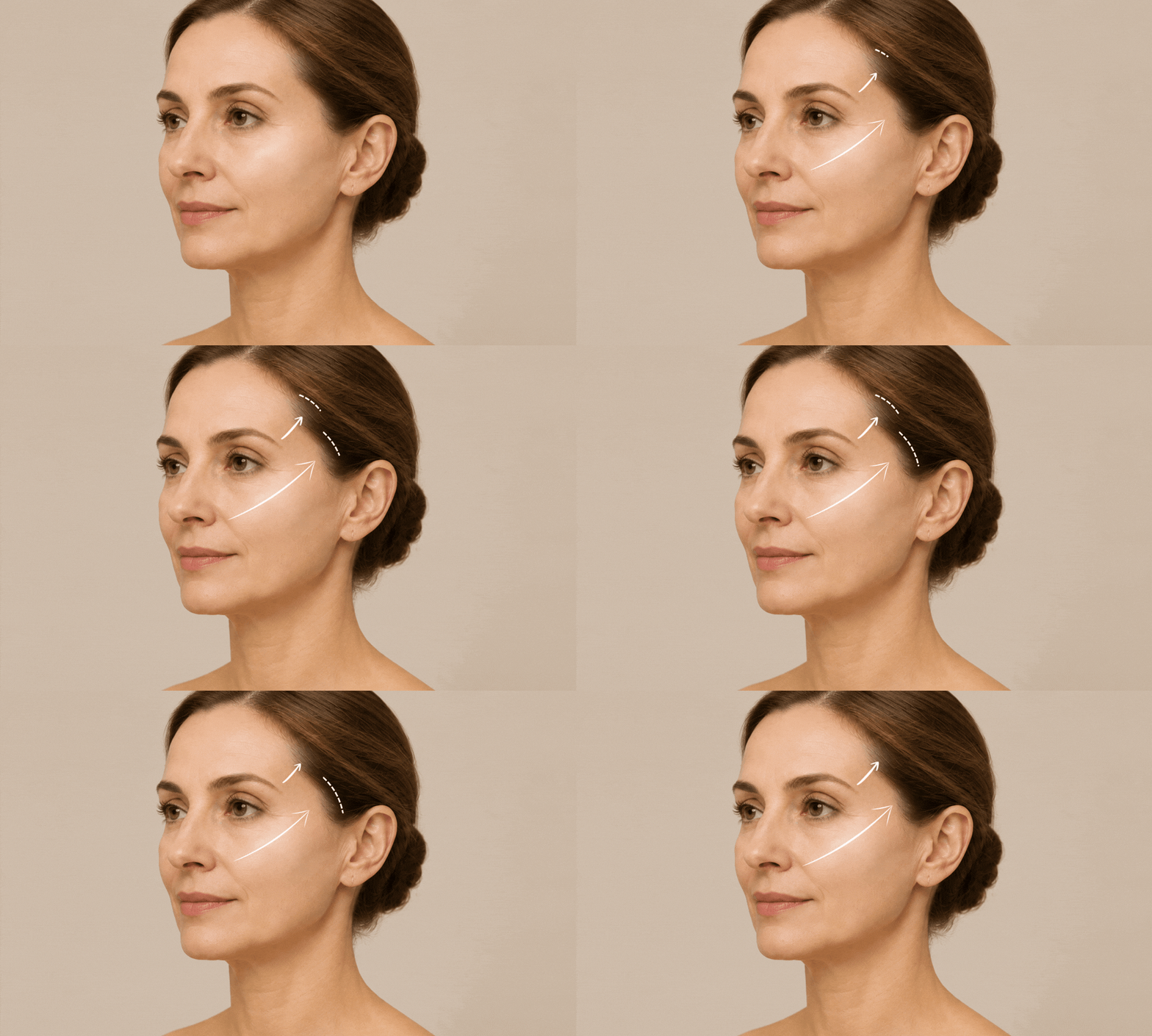
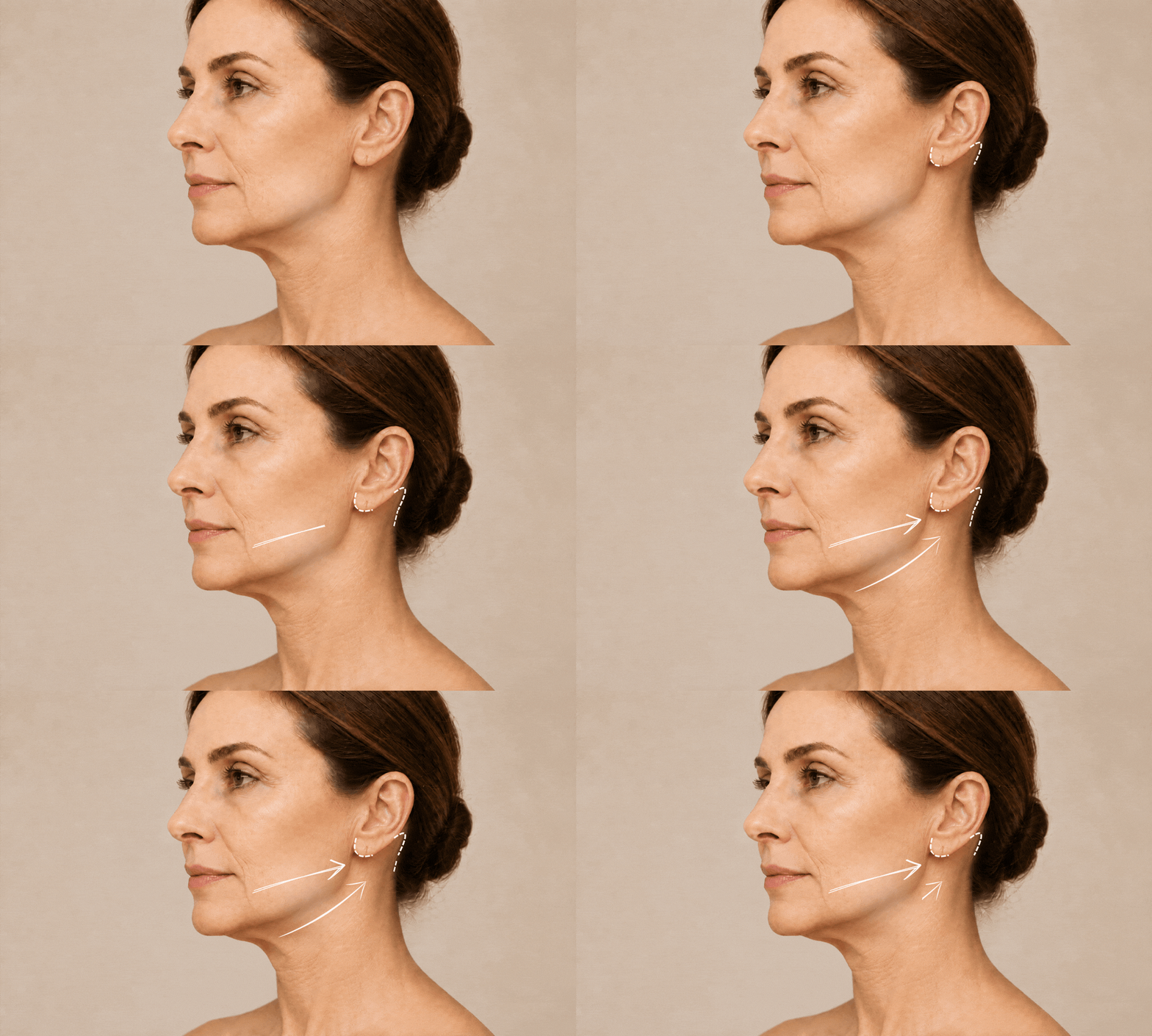
For deep structural repositioning, aiming for the greatest possible discretion in scarring, the technique's refined access points were used:
Temporal region and upper third: incisions hidden within the scalp, allowing lateral support and an opened gaze; midface and jawline: incisions that trace the ear's natural contours (pre- and post-auricular); neck and platysma (Deep Neck): incision within the natural crease beneath the chin (submental).
This anatomical approach allows dissection at the deep plane (Deep Plane), releasing the face's retaining ligaments and allowing muscle traction without excessive tension on the skin, aiming to avoid a "surgically altered" look.
This case illustrates a common path: once the face's deeper tissues have already lost support, fillers tend to worsen the feeling of heaviness rather than resolve it.
That's why the reasoning here started with repositioning these deeper structures, rather than continuing to treat only the surface. With the SMAS and platysma properly anchored, the excess skin could settle naturally, without the "stretched" look that often concerns those considering this type of surgery. The entire procedure was performed under local anesthesia with light sedation, allowing same-day discharge.
The photos, taken two months after the procedure, illustrate how the tissue has been responding during this still-early stage of recovery.
Even at this stage, a more defined jawline, a firmer neck, and a more harmonious overall expression are already noticeable — a result that reflects the patient's individual response and is still expected to evolve as the tissue continues to mature.
 PT
PT EN
EN